



Description
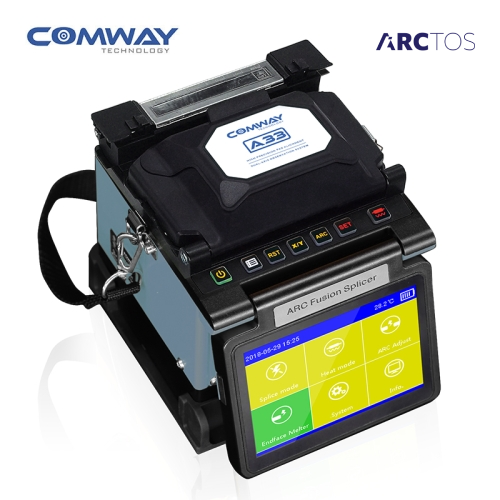
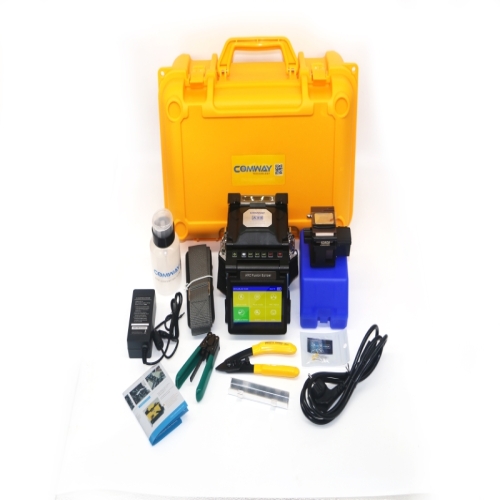
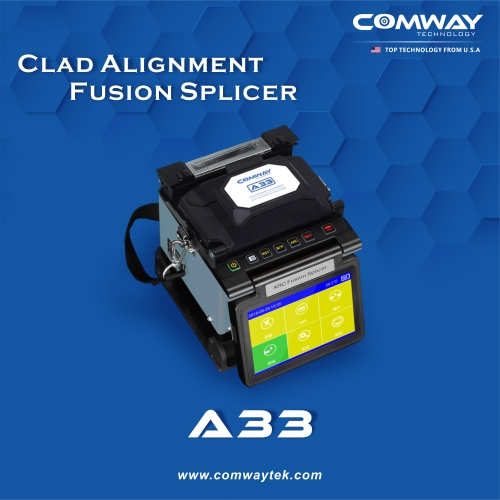
COMWAY A33 Fusion Splicer – Professional Fiber Optic Splicer
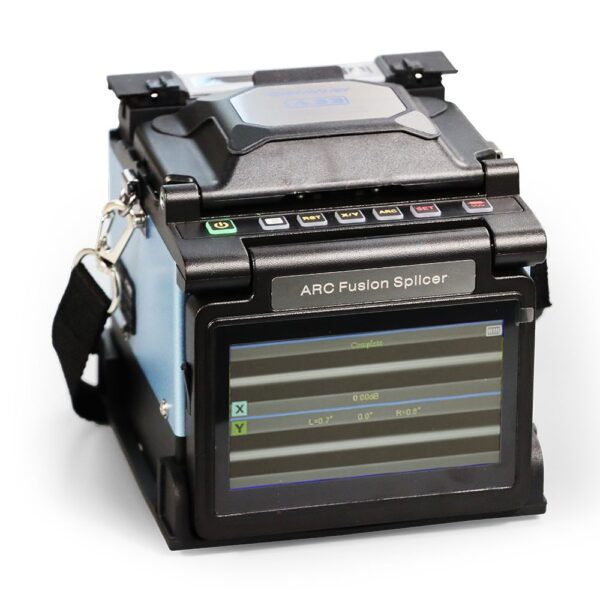
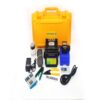
The COMWAY A33 Fusion Splicer offers a complete fiber optic splicing solution for FTTH technicians, installers, and professional field crews. It features High Precision PAS Alignment technology, a 4.3-inch touchscreen display, and fast splicing programs.
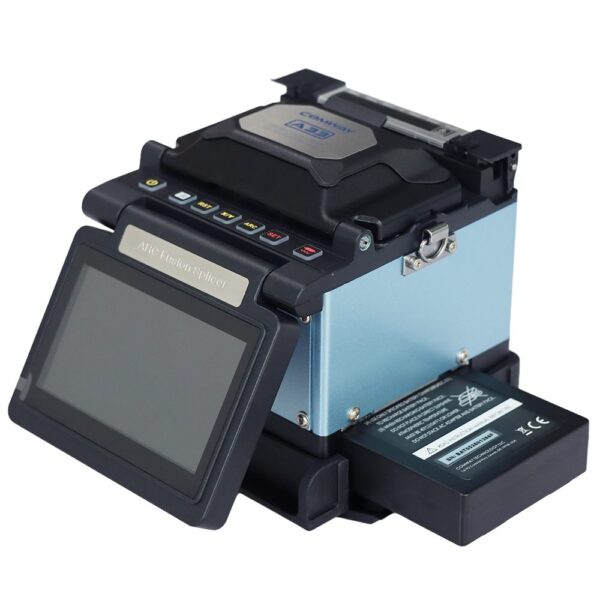
In addition, its portable design makes everyday fieldwork easier. At the same time, the 4,000 mAh battery provides more than 240 splicing and heating cycles, according to COMWAY. This allows technicians to complete more jobs with fewer interruptions.
Also explore the category Fiber Optic Splicers – Fusion Splicers for FTTH from ARCTOS Solutions and compare professional fusion splicers.
COMWAY A33 Fusion Splicer with PAS Alignment
The COMWAY A33 Fusion Splicer uses High Precision PAS Alignment technology to control the alignment of optical fibers. This enables high-precision splicing and helps technicians maintain consistent work quality.
Specifically, the SM Fast program completes the splicing process in 5 seconds. In comparison, the SM G.652 program takes approximately 15 seconds. In addition, the built-in heater offers a standard heating time of 15 seconds and features multiple adjustable settings.
However, each alignment technology has different characteristics. For this reason, read our guide Fusion Splicer Core Alignment or Cladding Alignment: Which Should I Choose?. The article explains the key differences and helps you evaluate the needs of your team.
Key Advantages of the COMWAY A33 Fusion Splicer
The COMWAY A33 combines speed, ergonomics, and modern functionality. More specifically, it offers the following advantages:
- PAS Alignment: It provides high-precision alignment control.
- Fast Splicing: Completes the SM Fast program in 5 seconds.
- Fast Heating: It offers a standard heating time of 15 seconds.
- 4.3-Inch Touchscreen Display: It makes operation and function selection easier.
- 4,000 mAh Battery According to the manufacturer, it supports more than 240 splicing and heating cycles.
- 2-in-1 Function: It combines a Fusion Splicer and a Fiber Endface Melter.
- Data storage It stores up to 20,000 splice records.
- Electrodes: They offer a rated lifespan of 5,000 arc discharges.
- Portable Design: The machine weighs approximately 1.8 kg with the battery.
- USB Connection: It features a high-speed USB port.
The COMWAY A33 combines fast operation with easy handling. In addition, its portable design makes it well suited for everyday fieldwork. As a result, it is a practical choice for professional fiber optic crews.
COMWAY A33 Technical Specifications
COMWAY provides detailed technical specifications for the A33 model. Therefore, you can review the machine’s capabilities before making a purchase.
| Manufacturer | COMWAY |
|---|---|
| Model | A33 |
| Type | Single Fiber Fusion Splicer |
| Alignment System | High Precision PAS Alignment |
| SM Fast Splicing Time | 5 Seconds |
| SM G.652 Splicing Time | 15 Seconds |
| Standard Heating Time | 15 Seconds, Adjustable |
| Typical Single-Mode Splice Loss | 0,02 dB |
| Typical Multimode Splice Loss | 0,01 dB |
| Typical DS Splice Loss | 0,04 dB |
| Typical NZDS Splice Loss | 0,04 dB |
| Typical BI Splice Loss | 0,02 dB |
| Display | 4.3-Inch Color Touchscreen Display |
| Magnification | 300× Single-Axis View, 500× Dual View |
| Battery | 4.000 mAh |
| Battery life | Over 240 Splicing and Heating Cycles |
| Splicing programs | Up to 300 |
| Heating programs | Up to 30 |
| Data storage | Up to 20,000 Records |
| Splice Protection Sleeves | 10–60 mm |
| Cladding diameter | 80–150 μm |
| Coating diameter | 100–3.000 μm |
| Electrodes | 5,000 Arc Discharges |
| Operating temperature | −10°C to +50°C |
| Operating Altitude | Up to 5,000 m |
| Wind Resistance | Up to 15 m/s, according to the manufacturer |
| Power supply | AC 100–240 V, 50/60 Hz |
| Connectivity | High-Speed USB |
| Dimensions | 136 × 141 × 136 mm |
| Weight Without Battery | 1,5 kg |
| Weight with Battery | 1,8 kg |
For more technical information, see the official COMWAY A33 Fusion Splicer page. There, the manufacturer provides detailed information about the machine’s functions and technical specifications.
Compatible Fiber Types
The COMWAY A33 supports different types of optical fibers, making it suitable for a wide range of installation and maintenance requirements in telecommunications networks.
- Single Mode (SM) – ITU-T G.652
- Multi Mode (MM) – ITU-T G.651
- Dispersion Shifted (DS) – ITU-T G.653
- Non-Zero Dispersion Shifted (NZDS) – ITU-T G.655
- Bend Insensitive (BI) – ITU-T G.657
In addition, the heater supports splice protection sleeves from 10 to 60 mm. This allows the technician to select the appropriate program depending on the material and the specific requirements of the job.
COMWAY A33 Fusion Splicer for FTTH and FTTx Installations
Fiber optic technicians use the COMWAY A33 Fusion Splicer for FTTH and FTTx installations. The machine supports splicing, network expansion, and maintenance tasks in telecommunications networks. In addition, it offers fast operating programs for everyday professional use.
The portable design makes the equipment easier to transport, allowing technicians to work at different installation locations. At the same time, the touchscreen enables easy operation and quick selection of the appropriate settings.
Key Applications
- Fiber to the Home (FTTH) Installations.
- Fiber Optic Network Extensions.
- Splicing in Distribution Frames and Termination Boxes.
- Maintenance of Telecommunications Infrastructure.
- Repair of Faults in Fiber Optic Connections.
- Professional FTTx Fieldwork.
However, every fully equipped field crew also needs the appropriate tools for fiber preparation, testing, and measurement. For this reason, read our guide What Tools Does an FTTH Technician Need. There, you will find practical information on how to organize your professional equipment.
Proper Fiber Preparation with a Fiber Cleaver
Fiber preparation directly affects splice quality. First, the technician removes the outer coating. Next, the fiber is carefully cleaned and a Fiber Cleaver is used to achieve a precise cleave.
In addition, regular cleaning of the V-grooves, fiber holders, and electrodes helps ensure proper machine operation. This way, the field crew can reduce splice failures and protect its equipment.
Discover the available Fiber Cleavers and Optical Fiber Cleavers on the ARCTOS Solutions online store.
What to Consider Before Buying a Fusion Splicer
Choosing a Fusion Splicer depends on the specific needs of your field crew. First, check the alignment technology and splicing speed. Then, consider battery life and compatibility with the types of optical fiber you use.
In addition, technical support plays an important role in everyday operations. At the same time, easy access to spare parts and maintenance services helps maximize the value and lifespan of the equipment. Therefore, price should not be the only factor when choosing a Fusion Splicer.
For more buying advice, see our guide Fiber Optic Splicer Prices – What to Consider Before Buying. There, you will find the key criteria for comparison. In addition, you will understand which features matter most for the day-to-day work of your field crew.
Frequently Asked Questions About the COMWAY A33 Fusion Splicer
Is the COMWAY A33 suitable for FTTH installations?
Yes. The COMWAY A33 supports G.652 and G.657 optical fibers. In addition, it features a portable design and fast splicing programs. This allows technicians to carry out everyday FTTH network installation and maintenance tasks efficiently.
How long does it take to complete a splice?
According to COMWAY, the SM Fast program completes the splice in 5 seconds. However, the technician should also allow additional time for fiber preparation and heating of the splice protection sleeve.
How many splices can it perform on a single charge?
According to the manufacturer, the 4,000 mAh battery provides more than 240 splicing and heating cycles. However, temperature and working conditions can affect the actual battery life.
What alignment technology does the COMWAY A33 use?
The COMWAY A33 uses High Precision PAS Alignment. Specifically, the system checks the alignment of the optical fibers before splicing and helps ensure precise, consistent results.
What is the typical splice loss?
COMWAY states a typical splice loss of 0.02 dB for Single Mode and 0.01 dB for Multi Mode. However, cleanliness, cleave quality, and working conditions can affect the final result.
Technical Support and Fusion Splicer Service by ARCTOS Solutions
ARCTOS Solutions offers professional fiber optic equipment and specialized technical guidance in the Greek market. In addition, our team helps professionals choose equipment according to the specific requirements of their work.
Regular maintenance helps protect the Fusion Splicer and maintain splice quality. For this reason, read our guide When Does a Fusion Splicer Need Service?.
At the same time, the ARCTOS Solutions technical department provides diagnostic, maintenance, and repair services for professional equipment. See in detail the Fusion Splicer, OTDR, and Fiber Blower repair services.
ARCTOS Solutions has a physical presence at 6 Dilou Street, Galatsi, Attica. There, technicians can learn more about professional fiber optic equipment. In addition, they can find out more about the ARCTOS Solutions in Athens and the available services.
Are you interested in the COMWAY A33 Fusion Splicer? The ARCTOS team provides information about the machine and its availability. It also offers technical guidance to help you choose the right equipment. For more details, contact ARCTOS Solutions.


