


Description
Vesala NanoSonde VMS3-33 – 2.8 mm 33 kHz Microduct Locator
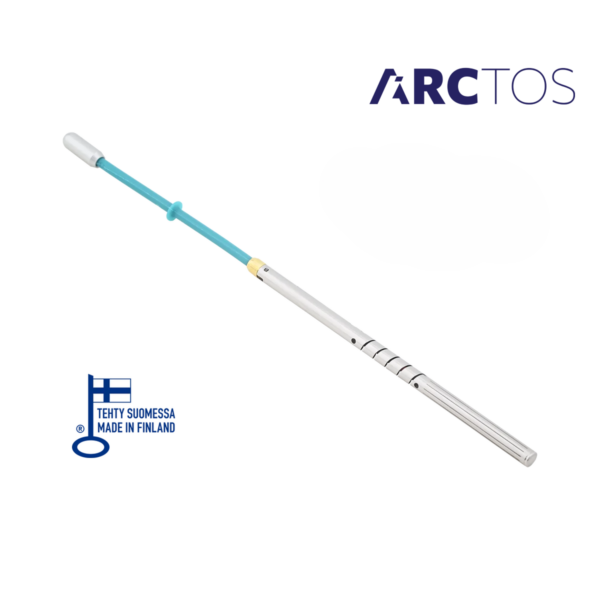
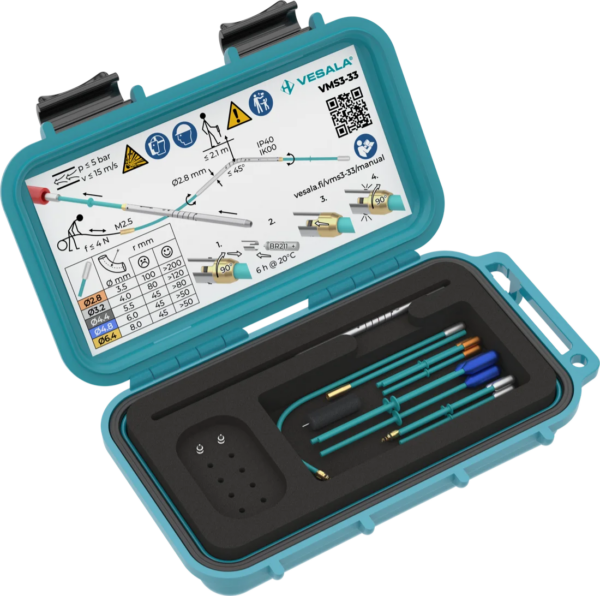
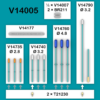
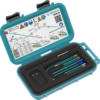
The Vesala NanoSonde VMS3-33 The Vesala NanoSonde VMS3-33 is a miniature active locating transmitter designed for professional work in fiber optic microducts. It has a diameter of just 2.8 mm and operates at a frequency of 33 kHz. This allows technicians to inspect very small microducts and locate blocked or problematic routes.
In addition, Vesala designed the NanoSonde for FTTH network applications and fiber optic infrastructure construction. The transmitter works with compatible 33 kHz receivers, while its compact size makes it easier to pass through narrow plastic microducts.
Also explore the category Cable Tracers from ARCTOS Solutions for more professional locating instruments.
Vesala NanoSonde VMS3-33 for Locating Blocked Microducts
During fiber optic network installation, microducts must provide a clear path for the cable. However, a blockage, deformation, or other duct issue can prevent successful installation.
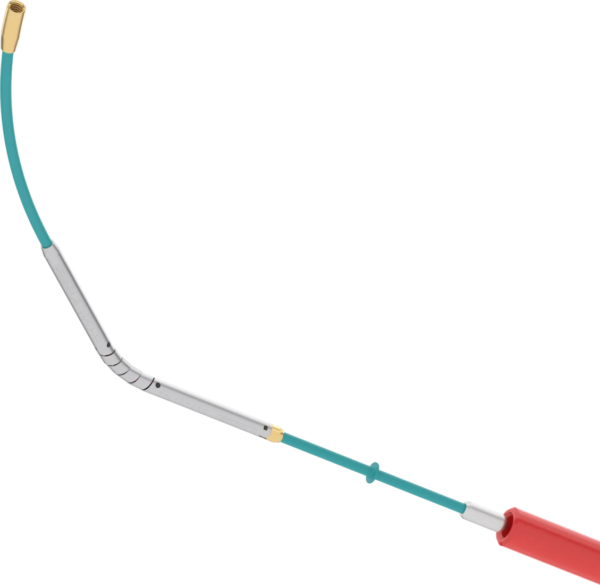
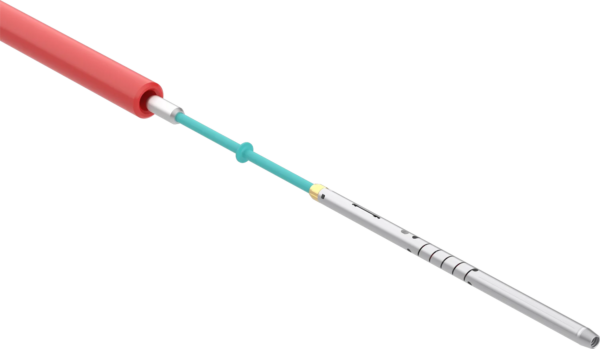
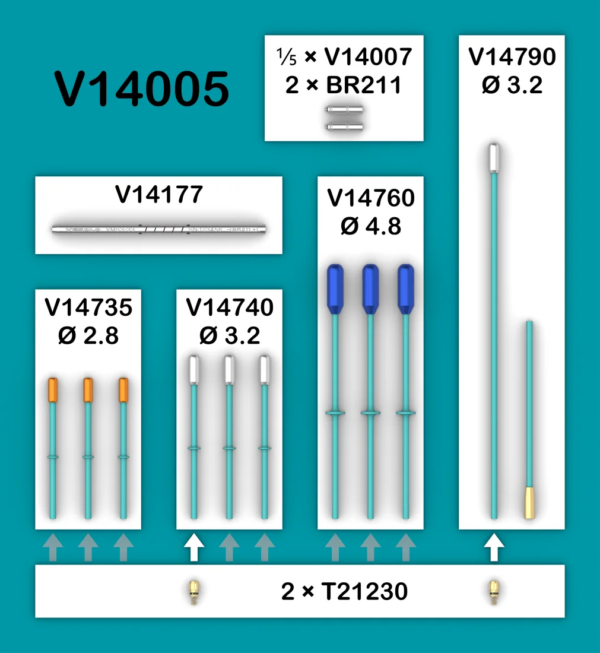
The Vesala NanoSonde VMS3-33 helps technicians locate the problematic point. First, the operator prepares the transmitter with the appropriate accessories. Next, the system is propelled through the microduct using compressed air, following Vesala’s safety instructions.
If the transmitter stops at an obstruction, the technician uses a compatible 33 kHz receiver to locate the signal from the surface. This makes it possible to identify the approximate blockage area and plan a more targeted intervention.
Key Advantages of the Vesala NanoSonde VMS3-33
This NanoSonde combines compact dimensions with practical operation. More specifically, it offers the following advantages:
- Diameter 2.8 mm: Allows inspection of very small microducts.
- 33 kHz Frequency: Provides compatibility with suitable locating receivers.
- Microduct Inspection: Supports internal diameters starting from 3.5 mm.
- Blockage Detection: Helps identify the point where the transmitter stops.
- Low Weight: Weighs just 1 g including the battery.
- Battery Life: Provides approximately 6 hours of operation at 20°C.
- Easy to Transport: Its compact size makes it easy to use in the field.
- Professional Application: Suitable for FTTH and FTTx infrastructure inspections.
Therefore, the NanoSonde is a specialized choice for field crews that require more precise fault location in fiber optic microducts.
Vesala VMS3-33 Technical Specifications
Vesala provides the following technical specifications for the VMS3-33 model. The values refer to the transmitter itself and the operating limits specified by the manufacturer.
| Manufacturers | Vesala |
|---|---|
| Country of Manufacturer | Finland |
| Model | VMS3-33 |
| Manufacturer Part Number | V14003 |
| Type | Active Locating Transmitter / NanoSonde |
| Operating Frequency | 33 kHz (32.768 Hz) |
| Transmitter Diameter | 2,8 mm |
| Transmitter Length | 61 mm |
| Weight with Battery | 1 g |
| Minimum Internal Duct Diameter | 3,5 mm |
| Typical Inspection Diameters | 3.5 / 4 / 6 mm, with Suitable Accessories |
| Signal Range in Air | Up to 2.1 m |
| Battery Type | BR211 Lithium |
| Battery Voltage | 3 V |
| Battery life | Approximately 6 Hours at 20°C |
| Connection Thread | M2 Female Thread at Both Ends |
| Protection Rating | IP40 |
| Mechanical Protection | IK00 |
| Operating temperature | −10°C to +50°C |
| Maximum Air Pressure | 5 bar |
| Maximum Blowing Speed | 15 m/s with a suitable shock absorber |
| Use with Water | Not Permitted |
| Compatible Receivers | Vesala CL43 and Compatible 33 kHz Receivers |
For additional information, please refer to the official Vesala NanoSonde VMS3-33 page and the manufacturer’s technical manual.
Compatibility with the Vesala CL43 Compact Locator
The Vesala NanoSonde VMS3-33 transmits a 33 kHz signal. Therefore, the technician needs a compatible receiver that supports this frequency in order to locate the transmitter.
The VESALA Compact Locator CL43-PA is a compatible locating solution. The receiver can detect the NanoSonde signal and help identify its position.
In addition, the CL43 is suitable for professional locating tasks involving cables, sondes, and underground routes. This allows a field crew to use the same receiver for multiple applications, provided that the appropriate transmitters are available.
Microduct Passability Testing Before Fiber Optic Installation
Microduct passability testing is an important step before installing a fiber optic cable. First, the crew must confirm that the microduct allows the appropriate test equipment to pass through.
With the Vesala NanoSonde VMS3-33, the technician can perform passability testing in very small microducts. If the transmitter travels through the entire route, the result provides a useful indication of passability for the specific test diameter.
Conversely, if the transmitter stops, the operator can locate its signal from the surface using a suitable receiver. This helps avoid blind troubleshooting and reduces unnecessary intervention.
For more information about microduct infrastructure, read the article Microduct Installation with the Jetting V4 Grizzon. The guide explains microduct management in telecommunications projects.
Vesala VMS3-33 vs. MicroSonde MPL6-33: What’s the Difference?
Vesala offers different sonde models for ducts of various diameters. Therefore, the choice depends mainly on the internal diameter of the duct and the method used to propel the sonde.
The VMS3-33 has a diameter of 2.8 mm and supports applications in ducts with an internal diameter starting from 3.5 mm. In contrast, the MPL6-33 has a diameter of 6.4 mm and requires a duct with an internal diameter of at least 8 mm.
For larger microducts, also see the VESALA MICROSONDE MPL6-33 6.4mm 33kHz on the ARCTOS Solutions online store.
Important Instructions for Use
The Vesala NanoSonde VMS3-33 is intended for professional use. Therefore, technicians should follow the Vesala manual and select accessories that match the diameter of the microduct.
When propelling the sonde with compressed air, always use a suitable shock absorber and the specified collection system at the outlet. In addition, observe the pressure and speed limits and use the appropriate personal protective equipment.
The transmitter has an IP40 protection rating. Therefore, do not use it in microducts containing water or in applications that exceed the manufacturer’s specified limits.
Frequently Asked Questions About the Vesala NanoSonde VMS3-33
What is the Vesala NanoSonde VMS3-33?
It is a 2.8 mm diameter active 33 kHz transmitter. Technicians use it to test the passability of small microducts and locate blocked routes in fiber optic infrastructure.
What microduct diameters is it suitable for?
The NanoSonde supports microducts with an internal diameter starting from 3.5 mm. In addition, with the appropriate accessories, it can be used with 4 mm and 6 mm microducts, as well as other compatible diameters specified by the manufacturer.
Does it work with the Vesala CL43?
Yes. The Vesala CL43 supports 33 kHz sonde locating. Therefore, it can be used with the VMS3-33 to detect the signal from the surface.
How long does the battery last?
The BR211 3 V battery provides approximately 6 hours of operation at 20°C. However, low temperatures may reduce battery life.
Can I use the NanoSonde in water?
No. Vesala does not permit the use of the VMS3-33 in water. Therefore, the technician should verify the condition of the microduct before carrying out the inspection.
Does the Vesala NanoSonde VMS3-33 include a receiver?
The VMS3-33 is a locating transmitter and does not function as a complete locating system on its own. To determine its position, the technician needs a compatible 33 kHz receiver, such as the Vesala CL43.
Vesala NanoSonde VMS3-33 from ARCTOS Solutions
ARCTOS Solutions offers professional equipment for fiber optic networks and telecommunications infrastructure in the Greek market. In addition, it provides technical guidance for selecting compatible locating instruments and accessories.
If you are looking for equipment for microduct inspection, you can explore more products in the category Cable Tracers.
For information about the Vesala NanoSonde VMS3-33, its availability, and compatible accessories, contact ARCTOS Solutions.


